
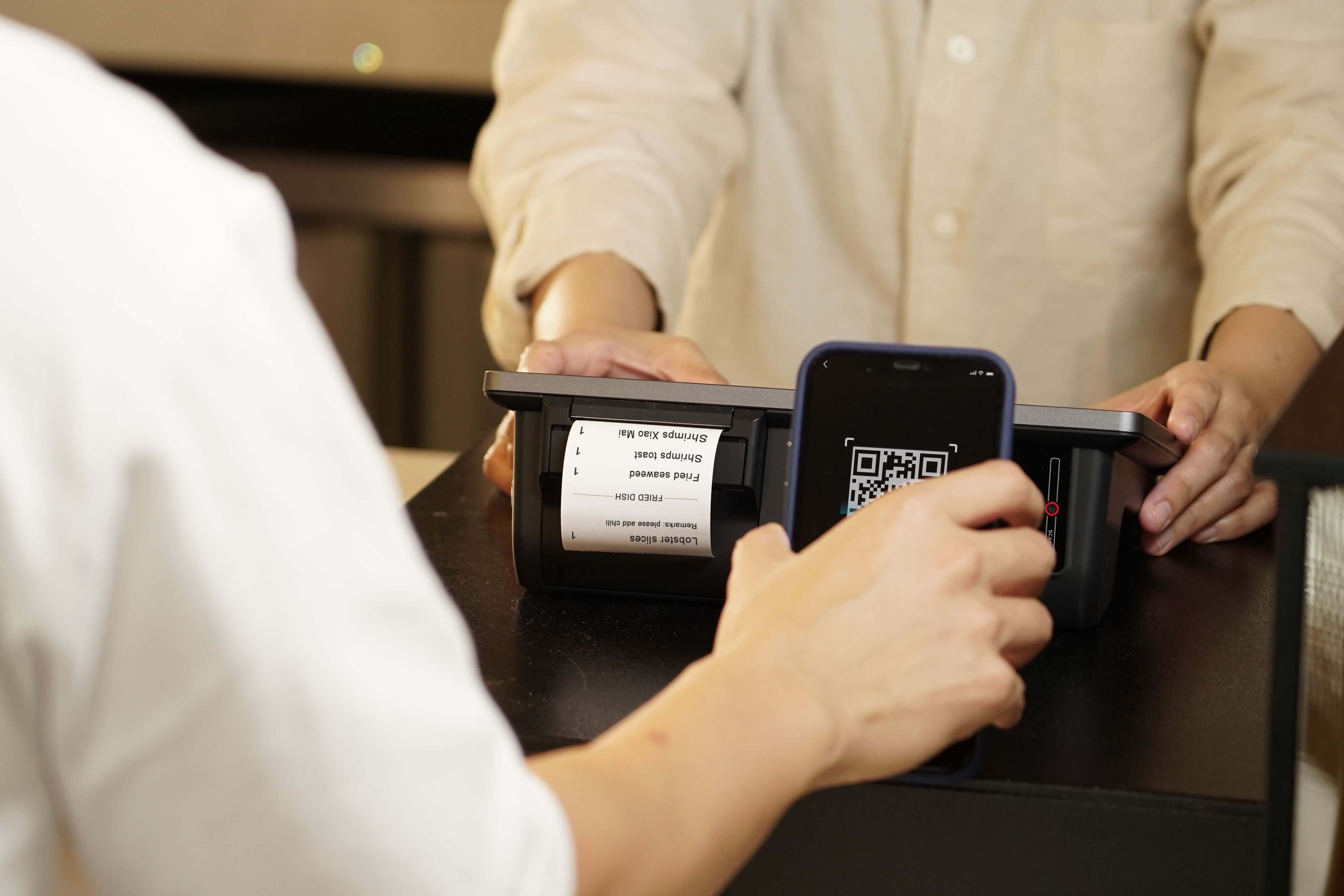
To convert COD to prepaid UPI, give buyers one clear, honestly disclosed reason to pay now, such as a small discount, cheaper shipping or earlier dispatch, and keep that incentive below what a prepaid order genuinely saves you. This guide supplies the maths, the checkout copy, the legal guard-rails and a test plan, using labelled assumed figures throughout.
It is written for a small Indian seller who already takes cash on delivery and wants more orders paid upfront without losing buyers or giving away margin. Every rule and platform detail below was read on the cited official page on 14 October 2026; every rupee figure in a worked example is an assumption for illustration, not a benchmark or a quote.
Quick answer: To convert COD to prepaid UPI, first calculate how much cheaper a prepaid order is for you than a COD order. Offer an incentive well below that saving, show it before the payment step, make sure it reaches the buyers who would otherwise choose COD, and test it against a control group. Judge the result on net contribution per 100 checkouts, not on prepaid share.
How to convert COD to prepaid UPI: three moments and four levers
A buyer can be nudged toward prepayment at three moments: before checkout (product page and cart messaging), at the payment step (the order of options and the wording beside them), and after the order is placed as cash on delivery (a confirmation message with a payment link). Each moment suits different levers, and each has a different cost.
| Moment or control | Typical lever | Main risk | Best used when |
|---|---|---|---|
| Before checkout | A line such as "Pay by UPI and save" near the price | Buyers who already prepay claim the benefit | Your prepaid share is already moderate |
| At the payment step | Discount, free shipping or a clearly disclosed COD fee beside the options | Abandonment if the wording feels pushy | Most of your COD buyers are habit-driven, not cash-constrained |
| After a COD order | A UPI payment link sent before dispatch | Message fatigue; consent rules for messaging | Your RTO losses concentrate in a few pincodes or categories |
The four levers that sit behind these moments are price (a discount), cost (free or cheaper shipping), friction (the order and default of payment options) and certainty (clear refund and failed-payment wording). Price is the lever most often over-used, so most of this guide covers its arithmetic.
Why a prepaid order costs you less
A prepaid order costs less in expectation for three reasons. First, the buyer has already paid, so refusal at the door is less likely; cash on delivery carries no commitment until the parcel arrives. Second, cash collected by a courier reaches you later. Shiprocket's support page, last modified on 24 June 2024 and read on 14 October 2026, says it credits COD amounts three times a week with a D+8 working-day processing time from delivery, whereas Delhivery's page (updated 14 November 2023) says the COD amount is transferred to the seller within 48 hours if your wallet balance is positive. Your own courier terms decide which applies. For a prepaid order, Razorpay says it settles captured payments on a settlement cycle that is subject to bank approval and varies by business vertical and risk factors.
Third, a returned COD parcel produces no revenue at all. Couriers also treat the two payment modes differently: Delhivery's help centre says its platform assigns a payment mode of COD or prepaid to each order it fetches, and its RTO Predictor takes the payment method as one of its inputs alongside consignee details, product category and shipment value when it scores the risk of return. That is a vendor-described signal, not proof about your store. Our guide on selling across all India sets the wider shipping context.
The incentive ceiling: a worked example
Define the saving per converted order, S, as the expected cost of a COD order minus the expected cost of a prepaid order. Expected COD cost is (COD RTO rate × cost per RTO) plus (delivered share × COD handling fee). Expected prepaid cost is (prepaid RTO rate × cost per RTO) plus the all-in payment gateway cost. Our sibling guide on RTO cost calculation explains how to measure the cost per RTO; here we assume it.
Worked example 1. All figures are assumptions:
- Average order value: ₹800.
- Cost per RTO (forward and return freight, packaging, handling, stock loss): ₹260.
- COD RTO rate 25 per cent; prepaid RTO rate 8 per cent.
- COD handling fee charged by the courier on each delivered COD order: ₹25.
- All-in gateway cost on a prepaid order, including GST: 2 per cent of ₹800 = ₹16 (an assumption; check your own agreement and Razorpay's pricing page).
| Item | COD order (₹) | Prepaid order (₹) |
|---|---|---|
| Expected RTO cost | 0.25 × 260 = 65.00 | 0.08 × 260 = 20.80 |
| COD handling on delivered orders | 0.75 × 25 = 18.75 | 0 |
| Payment gateway cost | 0 | 16.00 |
| Expected cost per order | 83.75 | 36.80 |
S = 83.75 − 36.80 = ₹46.95. That is the ceiling on your incentive, and it is a ceiling for a converted buyer only. An incentive of ₹30 would leave ₹16.95 per converted order, and an incentive above ₹46.95 loses money on every conversion even before the problems in the next sections. As a starting rule of thumb (our heuristic, not a standard), set the first incentive at no more than about half of S, here about ₹23, and round down.
The leakage trap: paying people who would have prepaid anyway
A discount offered on "UPI payments" is available to everyone who pays online, including customers who already prepay. Suppose 1,000 monthly orders, of which 150 are already prepaid and 850 are COD. A ₹30 incentive costs ₹4,500 on the 150 existing prepaid orders for no change in behaviour. Net benefit is c × S − (150 + c) × I, where c is the number of converted COD buyers and I the incentive.
| Scenario (150 already prepaid) | Converted COD buyers (c) | Savings c × 46.95 (₹) | Incentive paid (150 + c) × I (₹) | Net (₹) |
|---|---|---|---|---|
| ₹30, weak response | 200 | 9,390.00 | 10,500 | −1,110.00 |
| ₹30, strong response | 300 | 14,085.00 | 13,500 | 585.00 |
| ₹20, moderate response | 150 | 7,042.50 | 6,000 | 1,042.50 |
| ₹15, modest response | 100 | 4,695.00 | 3,750 | 945.00 |
Re-check the first row: 200 × 46.95 = 9,390; (150 + 200) × 30 = 10,500; the difference is −1,110. The smaller incentive wins whenever response is weak: it converts fewer buyers but pays far less to those who needed no persuasion. The break-even number of conversions is c = 150 × I / (S − I).
| Incentive (₹) | Break-even conversions | Share of the 850 COD buyers |
|---|---|---|
| 15 | 2,250 / 31.95 = 70.4 | 8.3% |
| 20 | 3,000 / 26.95 = 111.3 | 13.1% |
| 25 | 3,750 / 21.95 = 170.8 | 20.1% |
| 30 | 4,500 / 16.95 = 265.5 | 31.2% |
The higher the incentive, the larger the share of COD buyers you must convert just to break even. There is a design fix: if the offer appears only to buyers who have just selected COD (a "switch to UPI and save" prompt), the 150 existing prepaid buyers never see it and leakage falls to zero; the net becomes c × (S − I), for example 150 × (46.95 − 20) = ₹4,042.50 in the ₹20 row. The trade-off is that regular prepaid buyers may learn to click COD first, and the prompt must itself be honest and visible.
The hidden cost: buyers who leave, and the gain from extra deliveries
Two effects sit outside the simple saving. A nudge can push some COD buyers away, and a converted buyer is also more likely to accept the parcel, which is margin you would not otherwise have earned. Add two assumptions: contribution per delivered order is ₹200 (after forward shipping, before COD fee, gateway fee, incentive and return losses), and 75 per cent of COD orders and 92 per cent of prepaid orders are delivered (the complements of the RTO rates above).
The expected contribution of a COD order is 0.75 × 200 − 83.75 = ₹66.25, which is what you lose each time a buyer abandons instead of ordering. A converted buyer is worth S plus the extra deliveries: 46.95 + (0.92 − 0.75) × 200 = 46.95 + 34 = ₹80.95. Take the ₹20 incentive with 150 conversions, 150 existing prepaid buyers and 25 abandoning buyers (about 3 per cent of 850).
| Line | Cost-saving only (₹) | Including extra deliveries (₹) |
|---|---|---|
| Gain from 150 conversions | 150 × 46.95 = 7,042.50 | 150 × 80.95 = 12,142.50 |
| Incentive paid on 300 prepaid orders | −6,000.00 | −6,000.00 |
| Loss from 25 abandoning buyers | 25 × 66.25 = −1,656.25 | −1,656.25 |
| Net | −613.75 | 4,486.25 |
The columns bracket the truth: counting only cost savings, modest abandonment turns a small win into a loss; crediting extra deliveries, the same programme looks positive. Which is right depends on whether the orders you lose and gain are comparable, so measure delivered outcomes instead of arguing from a model.
Selection effects: why your prepaid RTO rate may mislead you
Buyers who choose to prepay without any nudge differ from buyers who need a nudge. They are often repeat customers, buy lower-risk items or live in better-served pincodes. When you measure an 8 per cent prepaid RTO rate, you are measuring them, not the people you converted. This is selection bias, and it means the saving S is probably an upper bound.
| Assumed RTO rate of converted buyers | Expected prepaid cost (₹) | Saving S against COD at 83.75 (₹) |
|---|---|---|
| 8% | 0.08 × 260 + 16 = 36.80 | 46.95 |
| 12% | 0.12 × 260 + 16 = 47.20 | 36.55 |
| 20% | 0.20 × 260 + 16 = 68.00 | 15.75 |
Each row is checked the same way: at 12 per cent, 0.12 × 260 = 31.20, plus 16 gives ₹47.20, and 83.75 − 47.20 = ₹36.55. If converted buyers return at 20 per cent, the ceiling falls from ₹46.95 to ₹15.75, and the "half of S" rule of thumb gives an incentive of under ₹8. Treat the first S as optimistic until you have data on converted buyers.
GST and the discount: instant beats after-the-fact
How you give the benefit changes its tax treatment. Section 15(3) of the CGST Act, as published in the amended-to-1-January-2022 text on the CBIC site, says the value of a supply does not include a discount given before or at the time of the supply if it is duly recorded in the invoice, and a discount given after the supply only if it is established under an agreement made at or before the supply, is specifically linked to relevant invoices, and the recipient has reversed the input tax credit attributable to it. An instant discount shown on the invoice is therefore the simpler route; a cashback paid later brings those extra conditions. Our GST invoice guide covers how to show discounts on an invoice.
An assumed illustration for a GST-registered seller with a GST-inclusive price and an 18 per cent rate: a ₹30 instant discount reduces the taxable amount, and the tax inside ₹30 is 30 × 18 / 118 = ₹4.58, so the net cost to you is about ₹25.42. The point is that the true cost of an invoiced discount can be lower than its face value, and your break-even table should use the right figure.
The same section, in sub-section (2)(c), lists incidental expenses charged by the supplier to the recipient at the time of or before delivery among the items included in the value of supply. See our guide to GST compliance for online sellers for registration.
What UPI costs you in 2026
UPI is the payment method most Indian buyers will use for a prepaid order; Wikipedia summarises UPI as an instant payment system operated by NPCI. On 15 September 2026 the Ministry of Finance issued a release through the Press Information Bureau. As read on 14 October 2026, it says person-to-merchant payments up to ₹2,000 remain free of merchant discount rate (MDR), that a nominal MDR of 0.4 per cent applies only to person-to-merchant transactions above ₹2,000 with a cap of ₹300 per transaction at ₹75,000 and above, and that banks have been advised to ensure merchants do not pass MDR on to customers.
The accompanying FAQ document adds four points that matter to a store. It says the framework takes effect from 15 October 2026. It says MDR applies to direct account-to-merchant UPI payments, while credit-linked UPI payments (such as RuPay credit cards on UPI) follow separate credit-product rules. It says UPI AutoPay mandates carry no prescribed MDR. And it says zero MDR for small merchants applies to the P2PM category, meaning small vendors receiving up to ₹1 lakh a month through UPI QR directly into their accounts, which describes street and neighbourhood vendors, not a store collecting through a payment gateway.
| Payment amount | MDR under the stated framework | Source of the figure |
|---|---|---|
| ₹800 | ₹0 | Up to ₹2,000 is free of MDR |
| ₹2,000 | ₹0 | FAQ worked table |
| ₹2,500 | ₹10.00 | Our calculation at 0.4% |
| ₹3,000 | ₹12 | FAQ worked table |
| ₹6,500 | ₹26.00 | Our calculation at 0.4% |
| ₹50,000 | ₹200 | FAQ worked table |
| ₹75,000 and above | ₹300 (cap) | FAQ worked table |
What this changes in your model
First, an order of ₹800 falls in the band described as free of MDR, but your gateway may still charge its own fee; the release addresses MDR, not gateway pricing. Second, if your typical basket exceeds ₹2,000, the MDR on UPI is a new cost line from 15 October 2026, and the statutory figure gives you a floor to compare against your gateway's quote. Rerun the incentive maths with your gateway's quoted rate.
Do not pass the cost on
The FAQ states that merchants onboarded cannot pass MDR on to customers and that UPI app providers may not charge platform fees. So do not add a "UPI fee" at checkout. Any UPI discount or disclosed COD fee must still follow the consumer rules below.
Forms of incentive and how each behaves
| Incentive | How it works | Strength | Risk |
|---|---|---|---|
| Flat discount on UPI | A fixed rupee amount off when paying online | Cost per order is fixed and easy to model | Leakage to existing prepaid buyers |
| Percentage discount with a cap | A percentage of the basket, with a maximum | Scales with basket size | Most expensive on large baskets, where gateway cost is already higher |
| Free or cheaper shipping on prepaid | Shipping fee waived or reduced | Perceived value can exceed your cost | Only works if you already charge shipping |
| Disclosed COD fee | A visible fee reflecting COD handling | Pays for itself on COD orders | Must be shown early; may push buyers away |
| Part-payment advance | Buyer pays part online, balance on delivery | Reduces refusal risk on high-value items | More steps; check your gateway supports it |
Part payment deserves attention: Delhivery's RTO Predictor page describes an option to nudge the consignee to pay a part or the full shipment value and convert the payment mode from COD to prepaid or change the COD collectible amount, which is the same idea applied after the order.
Setting it up with Razorpay Offers
If your checkout runs on Razorpay, its Offers feature is a likely route. Razorpay's documentation, read on 14 October 2026, says Offers let you restrict the payment methods on which a discount applies and limit use to a defined period, and that Razorpay automatically applies the most suitable offer to the chosen payment method. The create-offer page lists the details worth knowing before you plan around it.
- Offer types are Instant (the customer pays the discounted amount), Cashback (paid later by the bank or wallet provider, only if you have an agreement with them) and Already Discounted.
- An instant offer can be flat or a percentage, with a minimum order amount; a percentage offer also takes a maximum discount.
- You can limit how many times an offer can be availed, and the page says an offer cannot be edited: disable the old one and create a new one.
- Offers are not supported on international currency or the Customer Fee Bearer model, and the Payment Links offers page says the feature is not available for UPI Payment Links.
One consequence follows. A maximum-discount cap keeps a percentage offer from becoming expensive on large baskets. Our Razorpay setup guide covers the account side.
UPI checkout in 2026: intent, QR and failed payments
Write your copy for the flow your buyer actually sees. Razorpay's UPI documentation says that, following NPCI guidelines, the UPI Collect flow was deprecated effective 28 February 2026, so customers can no longer pay by manually entering a UPI ID or mobile number, with listed exemptions including iOS app and mobile-web transactions. Its migration page says UPI QR code displays automatically on desktop checkout after collect is hidden, and UPI Intent is available on mobile web, with UPI Intent not supported on web. In plain terms, a desktop buyer scans a QR code with their phone, and a mobile buyer taps their UPI app. Copy that says "enter your UPI ID" may describe a flow your buyer will not see.
Buyers also worry about money debited without an order. The RBI's circular on turnaround times for failed transactions lists, for a UPI payment to a merchant where the account is debited but confirmation is not received at the merchant, auto-reversal within T + 5 days, with ₹100 per day compensation beyond that. For refunds that you initiate, Razorpay says a normal refund takes 5 to 7 working days. Reassurance copy should not promise a speed your gateway and the buyer's bank do not control.
Present it honestly: dark patterns and consumer rules
How you present the incentive matters legally as well as commercially. The Central Consumer Protection Authority issued the Guidelines for Prevention and Regulation of Dark Patterns, 2023 on 30 November 2023, and a PIB release of 8 December 2023 says they list 13 specified dark patterns and that such practices fall under unfair trade practices in the Consumer Protection Act, 2019. The full guidelines say they apply to platforms systematically offering goods or services in India, advertisers and sellers, and that the Annexure 1 illustrations are guidance and not an interpretation of law. The CCPA's guidelines page hosts the document, and Wikipedia's dark pattern article gives general background.
| Annexure 1 pattern | What it describes | How a prepaid nudge could trip it | Safer design |
|---|---|---|---|
| Drip pricing | Price elements not revealed upfront, or a higher amount charged than disclosed at checkout | A COD fee that first appears on the last screen | Show the benefit and any fee beside the options |
| Basket sneaking | Adding items or payments without consent, for example a pre-ticked paid extra | A pre-ticked paid add-on next to UPI | No pre-ticked extras; disclose necessary fees |
| False urgency | Falsely stating or implying urgency or scarcity | A countdown for the UPI discount that restarts | State the real end date or no timer |
| Confirm shaming | Phrases creating fear, shame, ridicule or guilt | "No thanks, I like losing money" on the COD button | Neutral wording for both options |
| Interface interference | Highlighting some information while obscuring other relevant information | COD hidden in grey small print | Equal visual weight for both options |
| Nagging | Repeated, persistent interruptions to effect a transaction | Several reminders a day to pay a COD order | One or two messages, with a stop option |
The Consumer Protection (E-Commerce) Rules, 2020, as published in the Department of Consumer Affairs copy, add related duties. Rule 4(9) says consent to purchase must be recorded through an explicit and affirmative action and not through pre-ticked checkboxes. Rule 7(1) requires an inventory e-commerce entity to display information on available payment methods and any fees or charges payable by users, and the total price in a single figure with a breakup of compulsory and voluntary charges.
The Consumer Protection (E-Commerce) (Amendment) Rules, 2026 are due to take effect on 1 January 2027, according to a PIB release of 10 September 2026. The release says they require e-commerce entities to comply with the dark-pattern guidelines, carry out a yearly self-audit and display a compliance certificate, and, where a price reduction is announced, to show both the reduced price and the prior price, defined as the lowest price in the 30 days before the announcement. The amendment text is on the Department's site. In practice, keep your list price stable, describe the UPI benefit as a payment-method offer, not as a markdown of the product, and do not inflate the list price before a promotion.
Checkout copy to test
Treat copy as a hypothesis, and start with the plainest variant. Behavioural research calls a pre-selected option the default effect, and the wider approach nudge theory. A default is not necessarily a dark pattern if both options are visible and equally easy to choose, but the table above is the test to apply to your own implementation.
| Variant | Example wording | Hypothesis |
|---|---|---|
| A. Plain benefit | Pay by UPI now and save ₹20 | A clear amount is enough |
| B. Benefit plus reassurance | Pay by UPI and save ₹20. If a payment fails, your bank reverses it automatically | Fear of failed payments is a barrier |
| C. Speed benefit | Pay by UPI and your order is packed first | Buyers value speed over rupees (only if true) |
| D. Neutral COD note | Cash on delivery is available; a handling fee of ₹25 applies | Transparent cost shifts some choices |
| E. Default order | UPI listed first, COD equally visible below | Order shapes choice |
Template: checkout block and confirmation message
Adapt the bracketed parts. Keep the amount identical to what the invoice will show.
- Option label 1: "Pay online by UPI (save ₹[amount])". Helper line: "On desktop, scan the QR code with any UPI app. On mobile, choose your UPI app."
- Option label 2: "Cash on delivery". Helper line: "[No fee / ₹[fee] handling fee]. Please keep the exact amount ready."
- Confirmation message for a COD order, sent once and only to buyers who opted in: "Hello [name], we have received order [number] for ₹[amount]. You can pay now by UPI using this link and save ₹[amount] before dispatch: [link]. If you prefer cash on delivery, no action is needed."
Designing the test without fooling yourself
Run an A/B test: show half of eligible visitors the new copy and half the old, at the same time, for the same period. Splitting by week confuses the incentive with whatever changed that week, such as a sale or a festival. Decide the success metric before you start: net contribution per 100 checkouts, not prepaid share. Record, for each group, checkouts started, orders completed, orders by payment mode and, after delivery, RTO by payment mode.
Small stores often lack traffic for a quick answer. Wikipedia's articles on sample size determination and statistical power explain why small differences need many observations. A standard approximation for comparing two proportions, at 5 per cent two-sided significance and 80 per cent power, is n per group = 2 × 7.85 × p̄ × (1 − p̄) / d², where p̄ is the average of the two rates and d their difference. Our own calculations with that formula:
| Prepaid share before → after | p̄ | d | Checkouts needed per group |
|---|---|---|---|
| 15% → 22% | 0.185 | 0.07 | about 484 |
| 10% → 15% | 0.125 | 0.05 | about 687 |
The pattern is the point: a large lift can be seen quickly, while a small one needs about a thousand checkouts across both groups or more, and RTO differences need far more. With a few hundred orders a month, run a full month, accept only large effects and treat the result as a direction, not a proof.
Template: one-page test plan
- Hypothesis: "A ₹[amount] UPI incentive shown at the payment step raises net contribution per 100 checkouts."
- Primary metric: net contribution per 100 checkouts (formula in the next section). Guard-rail metrics: checkout completion rate and prepaid RTO rate.
- Decision rule: roll out only if the treatment beats the control on the primary metric and no guard-rail worsens beyond [threshold].
Reading the result: a net contribution sheet
Worked example 2, per 1,000 checkouts in each group, all figures assumed. Contribution per delivered order is ₹200 (before COD fee, gateway fee, incentive and return losses), cost per RTO ₹260, COD fee ₹25 on delivered COD orders, gateway cost ₹16 on each prepaid order, and a ₹20 UPI incentive in the treatment groups, paid on every prepaid order. COD RTO is 25 per cent in all groups.
| Line | Control | Treatment 1 | Treatment 2 |
|---|---|---|---|
| Orders completed | 900 | 880 | 850 |
| Prepaid / COD orders | 100 / 800 | 300 / 580 | 250 / 600 |
| Prepaid share of orders | 11.1% | 34.1% | 29.4% |
| Prepaid RTO rate (observed) | 8% | 10% | 12% |
| Delivered orders | 692 | 705 | 670 |
| Contribution from delivered orders (₹) | 138,400 | 141,000 | 134,000 |
| RTO cost (₹) | −54,080 | −45,500 | −46,800 |
| COD fees (₹) | −15,000 | −10,875 | −11,250 |
| Gateway cost (₹) | −1,600 | −4,800 | −4,000 |
| Incentive paid (₹) | 0 | −6,000 | −5,000 |
| Net contribution (₹) | 67,720 | 73,825 | 66,950 |
| Difference from control (₹) | 0 | +6,105 | −770 |
Check Treatment 1: delivered = 0.90 × 300 + 0.75 × 580 = 270 + 435 = 705; RTOs = 30 + 145 = 175, and 175 × 260 = 45,500; COD fees = 435 × 25 = 10,875; net = 141,000 − 45,500 − 10,875 − 4,800 − 6,000 = 73,825. For Treatment 2, delivered = 220 + 450 = 670; RTOs = 30 + 150 = 180 and 180 × 260 = 46,800; net = 134,000 − 46,800 − 11,250 − 4,000 − 5,000 = 66,950. Both treatments raised prepaid share sharply, from 11.1 to 34.1 and 29.4 per cent, yet only the first improved net contribution. Treatment 2 lost ₹770 per 1,000 checkouts because fewer buyers completed checkout and its prepaid buyers returned parcels at a higher rate. That is exactly what a prepaid-share dashboard would hide.
Converting after the order: payment links and messages
You can also convert after the buyer has chosen COD. Razorpay's documentation says Payment Links can be created from the dashboard or by API, shared by SMS or email, given an expiry date, and set to send reminders, and the UPI payment link reference describes the UPI variant. Two limits matter. The Offers page says offers are not available on UPI Payment Links, so any incentive must be built into the amount you put on the link. And a link is only as good as its timing and the number of times you send it.
| When | Action | Why |
|---|---|---|
| Order placed (T) | Confirmation with the order summary and a UPI link carrying the same incentive as checkout | Buyer intent is highest |
| T + several hours | One reminder, if unpaid and the buyer opted in to messages | Catches buyers who were busy |
| Before dispatch | Link expires; the order ships as COD or is held, according to your stated rule | Avoids a COD parcel with a stale offer |
If you message on WhatsApp, follow its rules. The WhatsApp Business messaging policy says you may contact people only if they have given you their number or username and you have opt-in permission to send subsequent messages, and that you must respect requests to opt out. WhatsApp's platform pricing page lists current message pricing and categories. India's Digital Personal Data Protection Act, 2023 also governs how you handle buyers' phone numbers.
Which orders to target
You do not need to nudge every COD buyer. The saving per conversion differs by segment, and an incentive pays back fastest where the saving is largest. Using the same assumed costs as worked example 1 but with different COD RTO rates: for a high-risk pincode group where COD RTO is 40 per cent and prepaid RTO 12 per cent, COD costs 0.40 × 260 + 0.60 × 25 = 119.00 and prepaid costs 0.12 × 260 + 16 = 47.20, so S = ₹71.80. For a low-risk group with 10 per cent COD RTO and 8 per cent prepaid, COD costs 0.10 × 260 + 0.90 × 25 = 48.50 and prepaid 36.80, so S = ₹11.70.
| Segment (assumed) | S (₹) | Starting incentive at about half of S | Treatment |
|---|---|---|---|
| High-risk pincodes, COD RTO 40% | 71.80 | ₹35 | Show incentive; consider a part advance |
| Average pincodes, COD RTO 25% | 46.95 | ₹20 | Show incentive |
| Low-risk pincodes, COD RTO 10% | 11.70 | ₹5 or none | Neutral copy only |
Tiering needs enough data per segment, and different benefits for different buyers must still be disclosed and defensible, so keep the logic simple and written down. Our sibling guides on pincode-level RTO risk and COD address verification explain how to build segments; until then, use one modest incentive. See also our guide to delivering to all pincodes.
Illustrative scenarios: three small stores
These are illustrations with assumed figures, not case studies. In every case the gateway cost is assumed to be 2 per cent of the order, all-in.
Illustrative scenario: a costume-jewellery seller in Jaipur, basket ₹399
Assume cost per RTO of ₹150, COD RTO of 28 per cent, prepaid RTO of 9 per cent and a COD fee of ₹20. COD costs 0.28 × 150 + 0.72 × 20 = 42.00 + 14.40 = 56.40; prepaid costs 0.09 × 150 + 7.98 = 13.50 + 7.98 = 21.48. S = ₹34.92, so half is ₹17.46. A ₹30 incentive would be nearly 8 per cent of the basket and 86 per cent of S, which is too much. A ₹10 to ₹15 benefit is the realistic range.
Illustrative scenario: a home-textile seller in Surat, basket ₹1,299
Assume cost per RTO ₹300, COD RTO 30 per cent, prepaid RTO 10 per cent, COD fee ₹30. COD costs 0.30 × 300 + 0.70 × 30 = 90 + 21 = 111.00; prepaid costs 0.10 × 300 + 25.98 = 55.98. S = ₹55.02, half is ₹27.51. A ₹25 flat benefit, tested first on higher-risk pincodes, is defensible.
Illustrative scenario: a small-appliance seller in Pune, basket ₹6,500
Assume cost per RTO ₹450, COD RTO 20 per cent, prepaid RTO 5 per cent, COD fee ₹80. COD costs 0.20 × 450 + 0.80 × 80 = 90 + 64 = 154.00; prepaid costs 0.05 × 450 + 130 = 152.50. S = ₹1.50: at this basket the assumed 2 per cent gateway cost almost cancels the return saving, so a discount cannot pay. The result is highly sensitive to the gateway rate: at an assumed 1 per cent (₹65), prepaid costs 22.50 + 65 = 87.50 and S = ₹66.50. For high-value items, a part-payment advance or mandatory prepayment can be a stronger lever than a discount.
Metrics to monitor after launch
| Metric | How to read it | Warning sign |
|---|---|---|
| Prepaid share of orders | Online-paid orders divided by all orders | Rises while net contribution falls |
| Checkout completion rate | Completed orders divided by checkouts started | Falls after the change |
| RTO rate by payment mode | Returns divided by shipped, split by COD and prepaid | Prepaid RTO drifting toward COD |
| Net contribution per 100 checkouts | The decision metric | Below the control group |
Your payment, COD and shipping data need to sit in one place for this to work. ShopMate includes an analytics dashboard that can feed these comparisons; our guide to store analytics for small businesses explains the reports in more detail.
Mistakes and how to avoid them
- Measuring prepaid share only. Treatment 2 above shows a store raising prepaid share to 29.4 per cent and losing money; measure net contribution after delivery.
- Letting the incentive stack. A UPI benefit on top of a coupon on top of a flash-sale price can exceed S on a single order. Decide in writing whether stacking is allowed and enforce it in the store settings.
- Adding a UPI surcharge. The Ministry's FAQ says merchants cannot pass MDR on to customers, so a surcharge invites a complaint.
- Revealing the COD fee on the last screen. That is the drip-pricing example in Annexure 1; show it beside the option.
- Copy that describes a flow the buyer will not see. "Enter your UPI ID" may not match a QR or intent flow after the 2026 collect deprecation.
- Cashback with no paper trail. A later credit needs an agreement and invoice linkage under section 15(3)(b); prefer an instant, invoiced discount.
Launch checklist
- Calculate expected cost per COD order and per prepaid order from your own numbers.
- Set the first incentive at about half of S, or less if converted buyers may return more.
- Show the benefit and any COD fee beside the payment options, before the final step.
- Do not add a UPI surcharge.
- Use an instant, invoiced discount in preference to later cashback.
- Decide whether the incentive stacks with coupons and sale prices.
- Check wording against the Annexure 1 patterns: drip pricing, false urgency, confirm shaming, interface interference, nagging.
- Match your copy to the QR and intent flows buyers actually see.
- Confirm opt-in before any WhatsApp message.
- Prepare a control group and the success metric before changing anything.
- Review after a full month plus a settling period, and change one variable at a time.
Frequently asked questions
How much discount should I offer for prepaid UPI orders?
Offer less than the saving a prepaid order gives you, and remember that existing prepaid buyers may claim it too. In the worked example the saving was ₹46.95, so a ₹30 incentive needed to convert 31.2 per cent of COD buyers just to break even, while ₹15 needed 8.3 per cent. Start with about half of your own saving, test, and adjust.
Is it legal to charge extra for cash on delivery?
A clearly disclosed handling fee is often a commercial choice, but hidden or late-added charges can fall under the drip-pricing example in the CCPA's dark-pattern guidelines, and the E-Commerce Rules expect fees and the total price to be shown. Show any fee beside the payment option.
Will the 2026 UPI changes reduce my margin?
The Ministry of Finance release of 15 September 2026 says merchant payments up to ₹2,000 remain free of MDR and 0.4 per cent applies above that, from 15 October 2026 according to its FAQ. If your baskets are below ₹2,000 the statutory MDR is nil, but your gateway's own fees remain. Update your model with your gateway's actual rates.
Can I add a fee for paying by UPI?
You should not. The Ministry's FAQ says merchants cannot pass MDR on to customers and UPI apps may not levy platform fees. Model gateway cost inside the expected cost of a prepaid order, and use a discount or a disclosed COD fee as your lever instead.
Should I stop offering cash on delivery altogether?
Not necessarily. COD still serves buyers who cannot or will not prepay, and removing it can cost orders. Many stores keep it for lower-risk segments and steer higher-risk ones to prepayment or a part advance. Compare your own COD and prepaid break-even RTO rates, and read our sibling guide on whether to offer COD at all before deciding.
Can I send a UPI payment link to COD buyers on WhatsApp?
Yes, if the buyer has opted in to WhatsApp messages and your gateway supports payment links. Razorpay documents links with expiry dates and reminders. Keep the message about the order, send it once or twice before dispatch, and build the incentive into the link amount, since offers are not available on UPI links.
How long should I run a prepaid incentive test?
Long enough to see delivered outcomes, not only checkouts. Using the sample-size approximation above, detecting a lift from 15 to 22 per cent prepaid share needs about 484 checkouts per group, and RTO differences need far more. For small stores that usually means a full month of orders plus a settling period for returns. Avoid changing prices, ads or couriers meanwhile.
Does the UPI incentive affect my GST invoice?
Under section 15(3) of the CGST Act, a discount given at the time of supply and recorded on the invoice is excluded from the value of supply, while a later discount needs an agreement, invoice linkage and credit reversal by the recipient. An instant discount shown on the invoice is simpler.
Convert COD to prepaid UPI with ShopMate
If you want to convert COD to prepaid UPI without losing orders, you need checkout, payment status and shipping data in one place so you can compare payment modes honestly. ShopMate offers Razorpay checkout with UPI, COD, coupons and flash sales, and an analytics dashboard. Book a demo, learn about the team or read the pricing page. For setup, see our step-by-step Razorpay guide.
Disclaimer: This article is for general information only and is not legal, tax or financial advice. ShopMate is the publisher of this guide and has a commercial interest in the platform it describes. All rupee figures in worked examples are assumptions, not benchmarks or quotes. Rules, thresholds, fees and platform terms change, and your situation may differ. Consult a qualified chartered accountant or legal professional before making decisions.